

Lorem ipsum dolor sit amet, consectetuer adipiscing commodo.

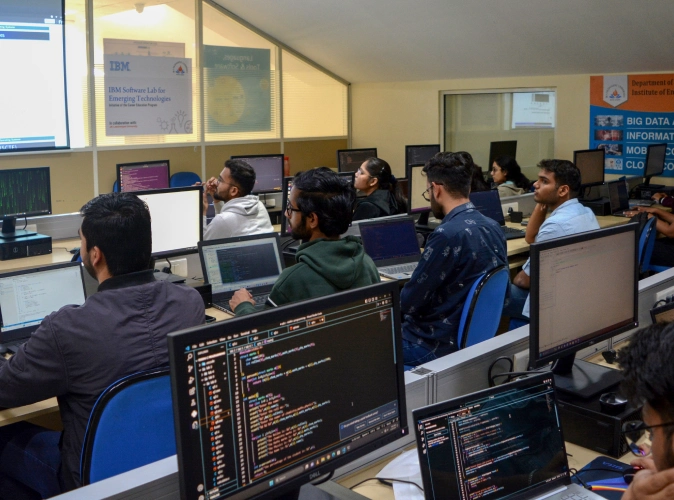
This lab delivers hands-on mastery of network architecture and modern security practices. Dual-boot systems, Cisco hardware, and specialised tools like Wireshark, Nmap, and Packet Tracer enable penetration testing, digital forensics, and vulnerability assessment. Students simulate and secure complex networks, preparing for leadership in cybersecurity and critical infrastructure protection.

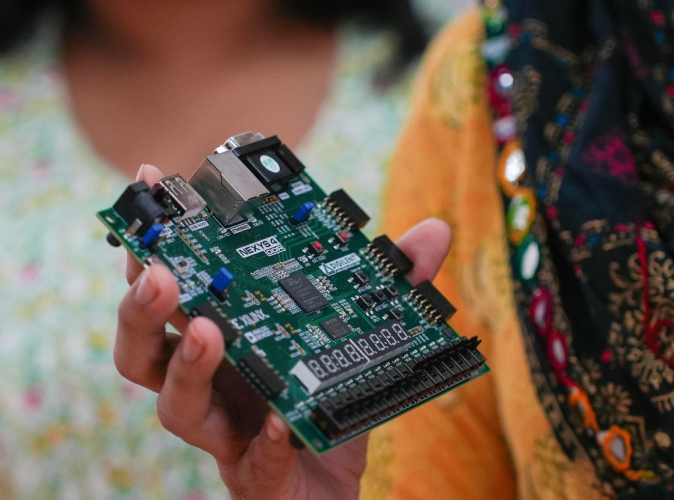
This specialist facility supports the complete lifecycle of microelectronic design. FPGA boards, advanced VLSI software, and precision oscilloscopes enable students to model, simulate, and verify complex circuits. Under expert mentorship, they gain fluency in chip-level design and hardware optimisation aligned with industry and research-grade standards.
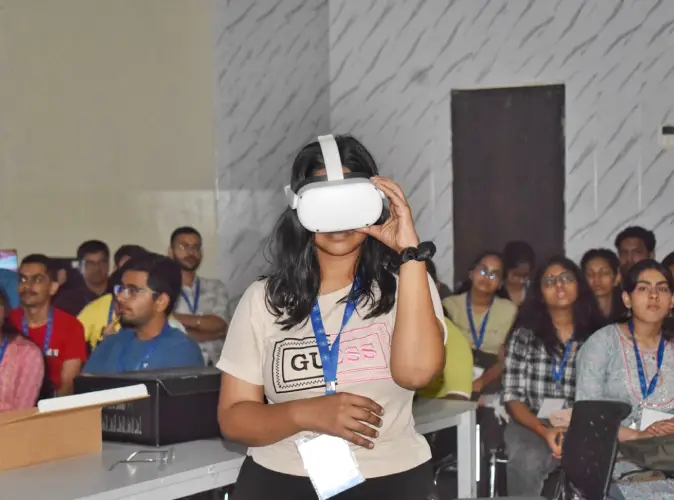
Fusing high-end computing with immersive hardware, the AR/VR Lab supports advanced 3D modelling, real-time rendering, and interactive experience design. Powered by RTX-class GPUs and platforms like Unity and Unreal Engine, it enables creation of virtual worlds, simulations, and games, advancing applications in education, entertainment, and human-computer interaction research.
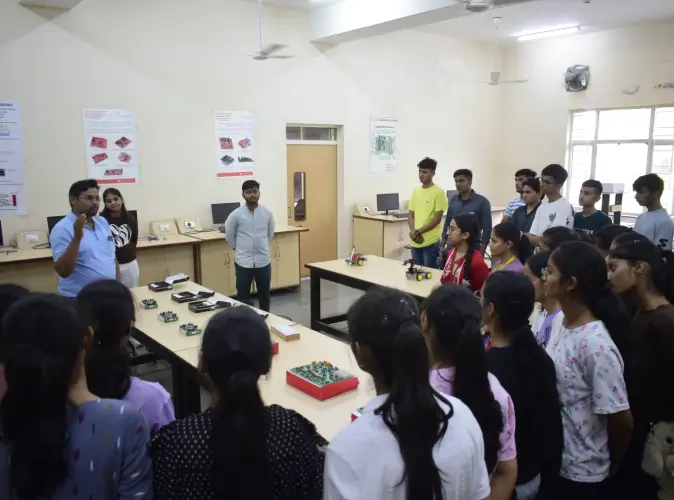
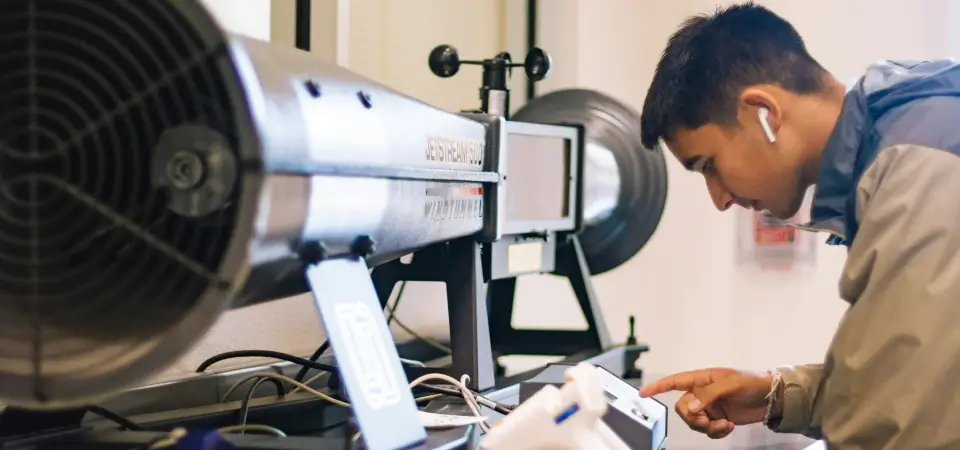
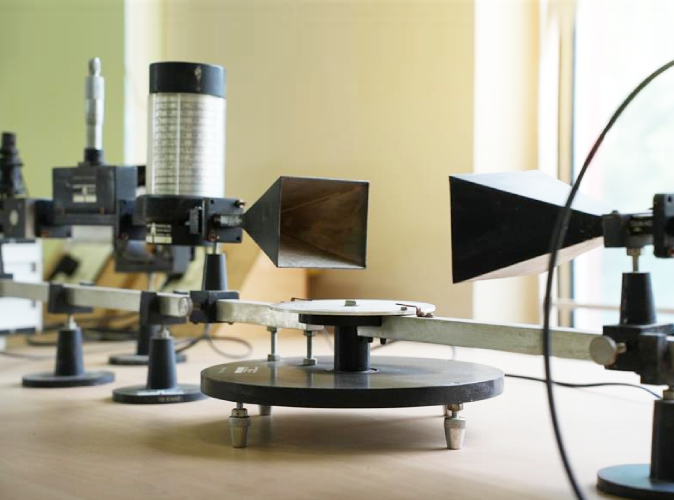
This facility offers end-to-end training in modern communication systems. Students work with microwave test benches, optical fibre setups, and antenna simulators, applying principles of modulation, signal processing, and wireless networks to design, analyse, and optimise communication links for diverse applications.

Equipped for large-scale data processing, the Data Science Lab integrates SSD-based systems, Python, R, and advanced libraries for analytics, modelling, and visualisation. With seamless access to cloud platforms and live datasets, it enables students to address real-world challenges across healthcare, finance, and beyond, building industry-ready expertise in data-driven problem-solving
Smart Grid Lab focuses on tackling traditional grid challenges for a sustainable energy future. Equipped with energy test benches, it features includes a grid emulator, 40 W solar a 1-phase microgrid setup. This setup panel, 30 W wind emulator, converters, hybrid energy storage, & programmable load.

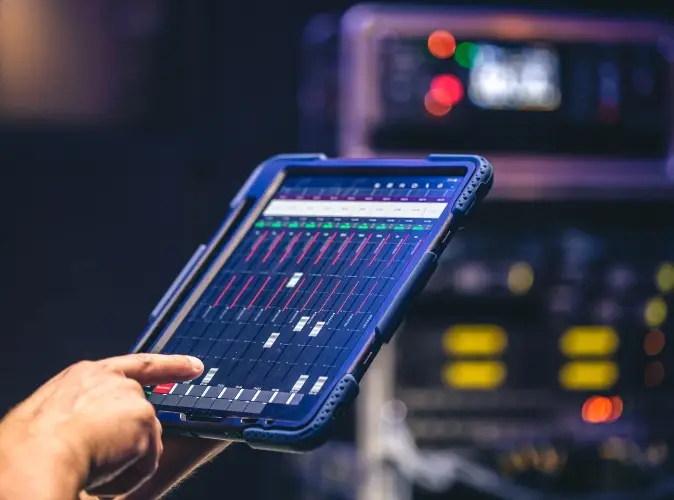
Integrating microcontroller platforms, Raspberry Pi, and industrial IoT setups, the lab prepares students to design, program, and deploy connected systems. Projects span from low-power embedded solutions to domain-specific IoT applications, fostering innovation in smart infrastructure, automation, and intelligent devices.
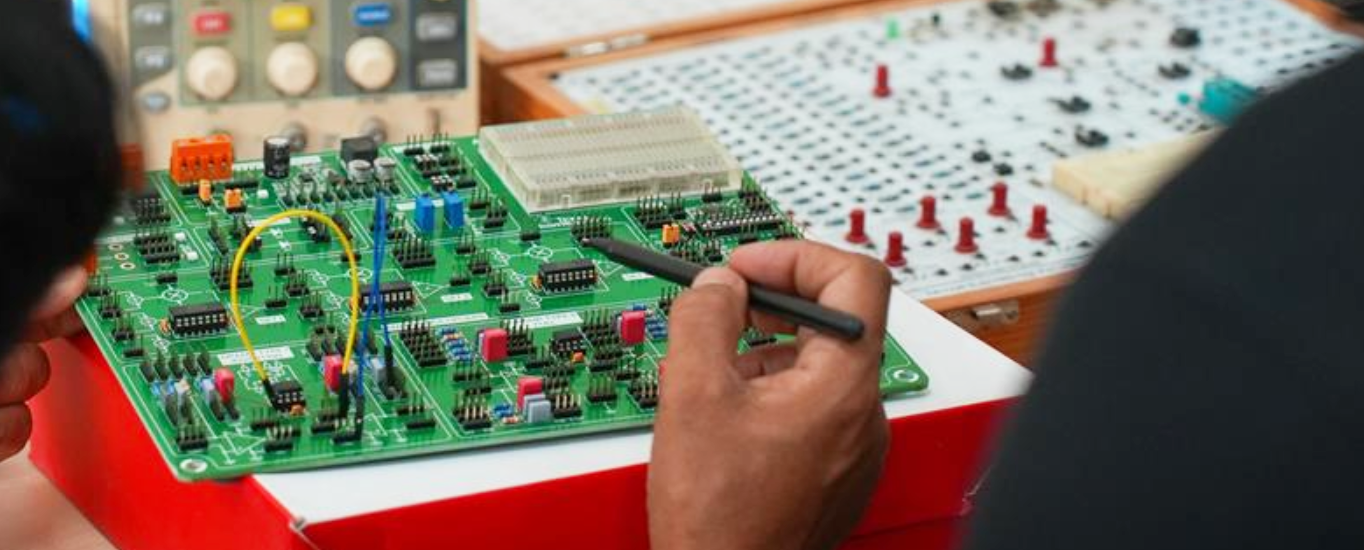

JKLU hosts Rajasthan's only AIMA BizLab, a virtual lab for management students, and utilizes AIMA BizLab software for simulating diverse management strategies. This lab is used regularly by top B-Schools like IIMs, ISB Hyderabad, ISB Mohali, IIT Chennai, XLRI, ICFAI Business School, and Amrita Business School.
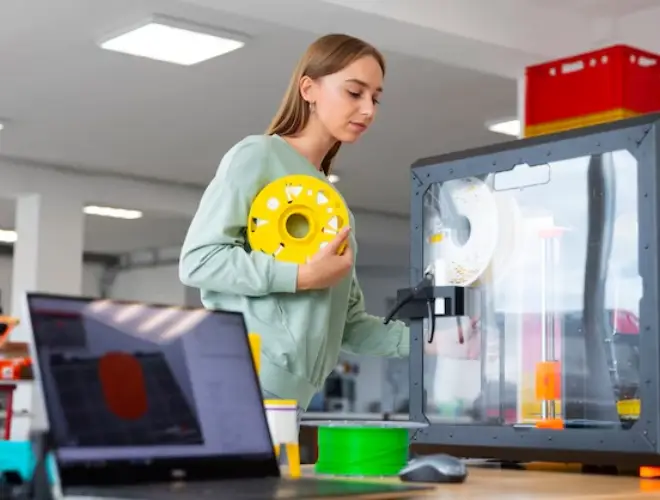
The Design Lab is a space where students and faculty research, explore, and discover the connection between technology, usability, and design. Its AI-powered UX tools, eye-tracking systems, usability testing stations, and digital fabrication tools offer support for data-driven research on UI/UX, information visualization, and digital product design in real-time.

The AI Lab is a high-performance computing environment optimised for machine learning, deep learning, and computer vision. Powered by Intel i7 processors, dedicated GPUs, and dual-boot Linux/Windows, it offers industry-standard frameworks like TensorFlow, PyTorch, and OpenCV, providing students with robust infrastructure for research, prototyping, and deployment of next-generation AI solutions.

Purpose-built for advanced digital creation, the Mac Lab houses high-performance Apple iMacs with Retina displays and the full Adobe Creative Cloud suite. It supports professional-grade workflows in visual design, animation, UI/UX, and media production, enabling students to execute complex, interdisciplinary projects with the same tools and standards used by leading global studios.
The Project Lab is a high-spec innovation hub for end-to-end development of software and hardware systems. With Intel i9 processors, Quadro GPUs, and cloud-integrated workflows, it supports AI, IoT, blockchain, and full-stack solutions. Students work in collaborative, mentored teams to produce industry-standard prototypes and deployable technologies.

Designed to solidify computational thinking, the Programming Lab offers high-performance systems and multiple IDEs for C, C++, Java, and Python. Students progress from foundational algorithms to advanced object-oriented and data-driven development, bridging theory and practice to prepare for research, competitive programming, and enterprise-scale software engineering.
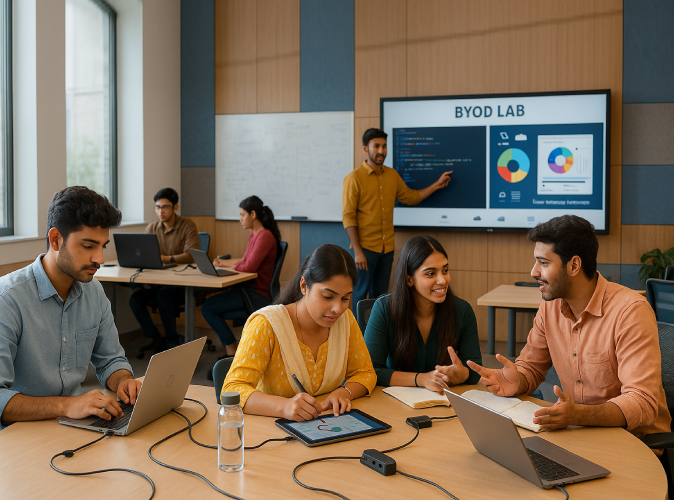
The BYOD Lab is a flexible, high-connectivity workspace optimised for interdisciplinary collaboration. With high-speed wired/wireless access, ergonomic design, and seamless integration with institutional cloud and virtual lab resources, it empowers students to develop, test, and present projects on their own devices in an adaptive, real-world working environment.
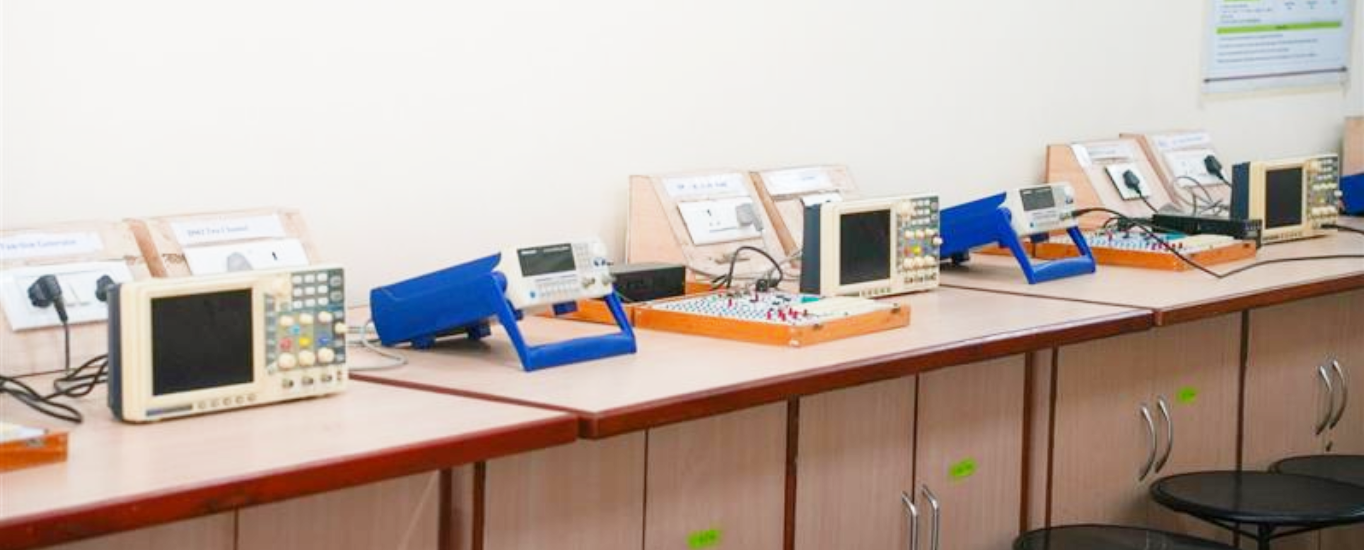
Outfitted with Texas Instruments trainer kits, signal generators, and oscilloscopes, this lab cultivates expertise in circuit design and analysis. Students build and test analog and digital systems, mastering the measurement, debugging, and optimisation techniques fundamental to electronics engineering and embedded systems development.


Near Mahindra SEZ,
Mahapura Ajmer Road, Jaipur
– 302 026, Rajasthan, India.


